
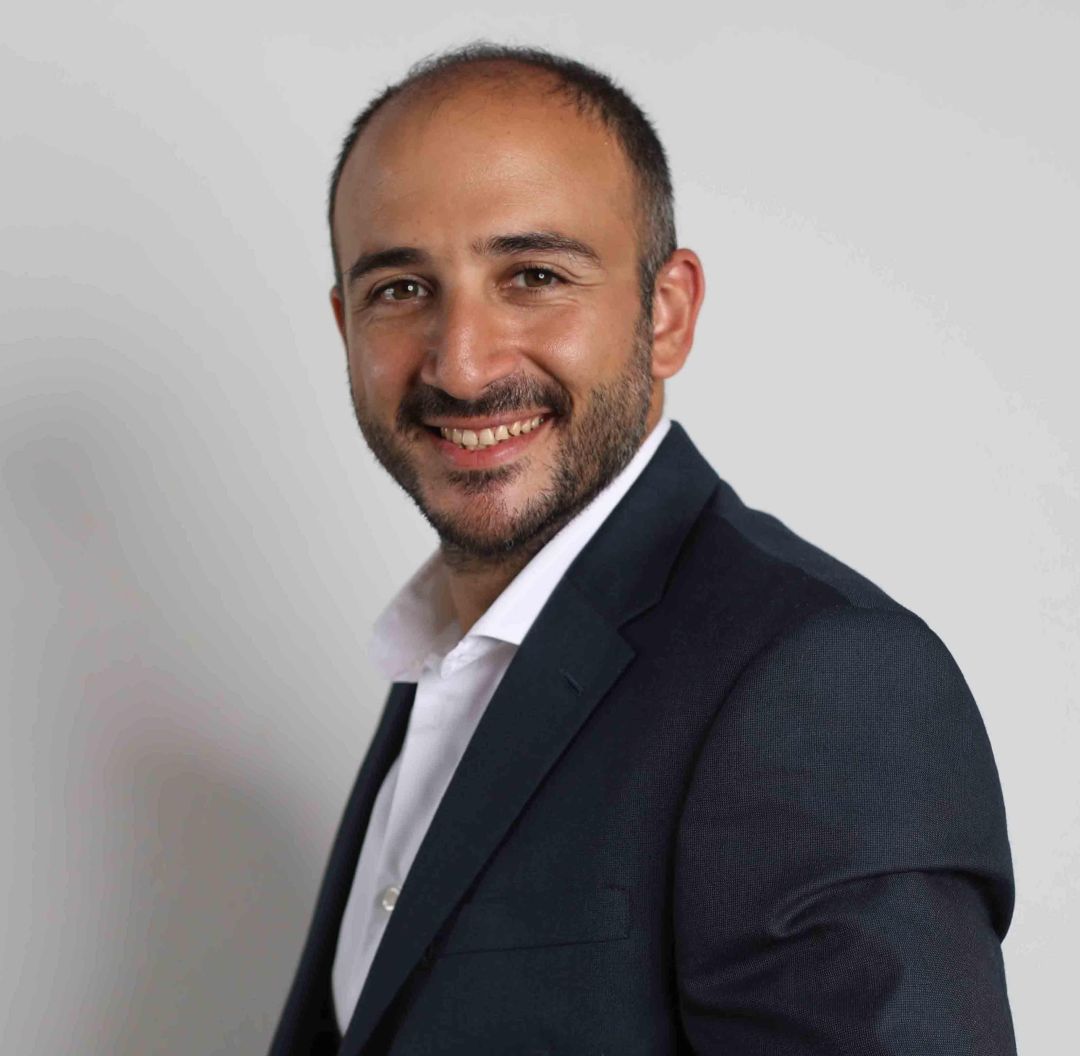
It has been a long while since I last published an interview for my project. When I started my initiative the Millennial Stage I had two set objectives in mind. The first is to shed light on exceptional individuals such as my guest below and to learn from them all the skills and tactics that allow me and future generations of people to become successful. The second is to utilize these learnings in coaching individuals and assisting them in arriving at their destination/s. As work and life consumed me, I went idle for a while. But then my friend Kareem Mukhtar urged me to meet Samer, a young immensely successful individual who has not allowed circumstance to affect his business aspirations. And so, I reached out to Samer and we went for lunch and he told me his Millennial Success Story! Samer started his first successful business in Beirut, but as the recent economic and political situation unfolded, he decided to start over in Paris. His business is currently flourishing which drove me to one conclusion, if you put Samer anywhere, he will succeed. The true question is how? What strategies does he deploy? How does Samer react to opportunities daily and how can we learn from him? I leave you with Samer who tells his story below. Enjoy!
Tell us about yourself & what did you study:
I’m an avid learner, who is passionate about the human story of progress in general and about exploring how certain individuals’ innovation, persistence, and dedication truly drive society forward.
I’ve also been fond of numbers so, from an early age, I read about mathematicians and algorithms wanting initially to become a full-time mathematician.
A lot of “practical” people influenced my early career decisions, so I ended up studying for a degree in Electrical and Computer Engineering at the American University of Beirut and a master’s in operations research from Columbia University. Consequently, and at a later stage, I decided to combine my two passions.
Today, I spend most of my time speaking to entrepreneurs who strive to make a difference in their industries and I help them achieve their goals faster by telling them the real story behind their financial numbers.
Can you tell us a little more about your Startup and how did the idea for it come to life?
Alex the CFO was born out of my experience training and investing in close to 400 startups in a coworking space that I co-founded in Beirut, Lebanon about 10 years ago.
I noticed a lack of synchronization between accountants, founders, and investors. That very often resulted in wasted opportunities, broken dreams, disappointed creators, builders, and the “doers” of the world.
A thought popped into my head: “There is a chance for me to make a dent in how some of the founders I looked up to, grew their businesses”
By bridging the worlds of compliance, financial reporting, entrepreneurship, and investing, I wanted to assist organizations in getting their chance to make an impact.
Moreover, I felt like the biggest winner because of the following reasons:
- I have a lot of fun dissecting the equations of profitability
- I love working with visionary builders
This was right around the time that Alex my son was born. I was transitioning between my first venture AltCity – and whatever the next adventure was going to be.
I understood very well that I fit the “corporate unemployable” bucket, and that my only hope would be to succeed. I literally had my back against the wall.
Note from Yahya: That resonated with me more in person as Samer spent a portion of our lunch explaining to me how he accepted this reality early on and how liberating it was!
I later understood that the biggest leaps I’ve made were when I felt my back was against the wall.
So, I called up all the founders I knew, I got three of them to sign up for a fractional CFO service and there I was, in business!
During the first 3 years and similar to many people, Lebanon was not kind to me. It blew my apartment away during the explosion of the 4th of August, its monetary meltdown destroyed my client base, and I found myself with my back against the wall one more time.
With no hesitation, I flew to Paris and started from scratch. This time the business had to be more robust, and more robust did it become!
Today, we provide a 1-Click Reporting System that simplifies financial reports, real-time KPI dashboards for clear business insights, and monthly CFO consultations to offer expert guidance. We’ve worked with more than 45 corporate groups, managing $58 million in revenue across 13 countries, and our service has facilitated transactions worth $140 million.
What is your secret sauce to getting to where you are (please tell us the steps)?
I don’t know about a secret sauce, but I can certainly pinpoint some principles that have helped me along the way.
- Start by putting service close to your heart. It will be painful to put in the work, without cultivating that deep empathy towards providing a service that will make a difference.
- It takes courage to dream big, so make it your life’s mission to find that courage. More people, more money, and more fun flow naturally toward big bold ideas.
- I avoid comparing myself to anyone. I don’t always succeed but I am well aware that it’s usually a distraction from my goals that causes this.
- Adapt to the loneliness of being a builder by partnering with other builders or by joining communities of like-minded people. Always remember, it is lonely at the top.
- Be brutally honest about whether you truly deliver the value you promise your customers. At Alex the CFO, our impact is measured with sales going up, our costs going down or investment coming in. It took us time to break it down this way, but when you get honest about self-assessment your energy goes into optimizing for the variables that make a difference.
- Being at the intersection of several disciplines, in our case finance and tech, has always been our true differentiator. First, it was being knowledgeable about cloud-based tools and integrations, now it’s about using AI to streamline the finance function.
What would you advise people who are currently struggling to do something with their passion?
I will start with what they shouldn’t do: they should not be idle. To find your passion, you need information about yourself and the world around you. Those data points accumulate as a result of your interactions with people and activities.
As they accumulate, make a judgment about what you want to keep and what you want to subtract. Accept that progress is not linear. It is messy. As long as you are learning and making progress, you are on the right path.
It’s important to have passion to solve problems or deliver value. But, keep in mind, that passion is the spark, not the fuel. A lot of people confuse spark with fuel.
The spark is not enough to get you going when you wake up in the middle of the night worrying about making payroll at the end of the month.
You need something deeper, stronger, and at a more fundamental level. A new identity that you wear about the person you want to be. Note from Yahya: This was my favorite quote by Samer. I found it quite insightful as most people struggle to understand this.
Where do you see yourself & the organization in the next 10 years?
An Advisory and AI CFO service powering 1,000 businesses that are driving and transforming their industries, supported by a Fund that facilitates $1Bn in financing to those companies.
Who is your biggest inspiration, can you please tell us in detail?
“The Billionaire Who Wasn’t: How Chuck Feeney Secretly Made and Gave Away a Fortune” by Conor O’Clery
My favorite quote from the book “It’s a lot more fun to give while you live than to give while you are dead.”
Could you tell us what skills people need to have to get to where you are?
- Curious, number lovers.
- Have service in their hearts.
- Empathetic.
- Be storytellers.
If you would go back to high school & college today what would you do differently that would help you in your career right now?
- Spend more time with entrepreneurs and builders.
- Work on failing earlier.
- Reject a lot of the barriers between disciplines that society has imposed upon us: It’s not art or computer science. It’s art AND computer science.
- Go through the process of building itself, it is not enough to work alongside builders. Learning the tools is what drives business possibilities.
For more information about Samer please follow him on Linkedin on the the link found here.
Note from Yahya:
I recently launched Taqreer AI, a unique Arabic AI newsletter that summarizes major AI news of the week and uncovers the most recent AI applications. Please feel free to subscribe here http://www.taqreerai.com

 themillennialstage.net